
... the will to change something that won't be changed
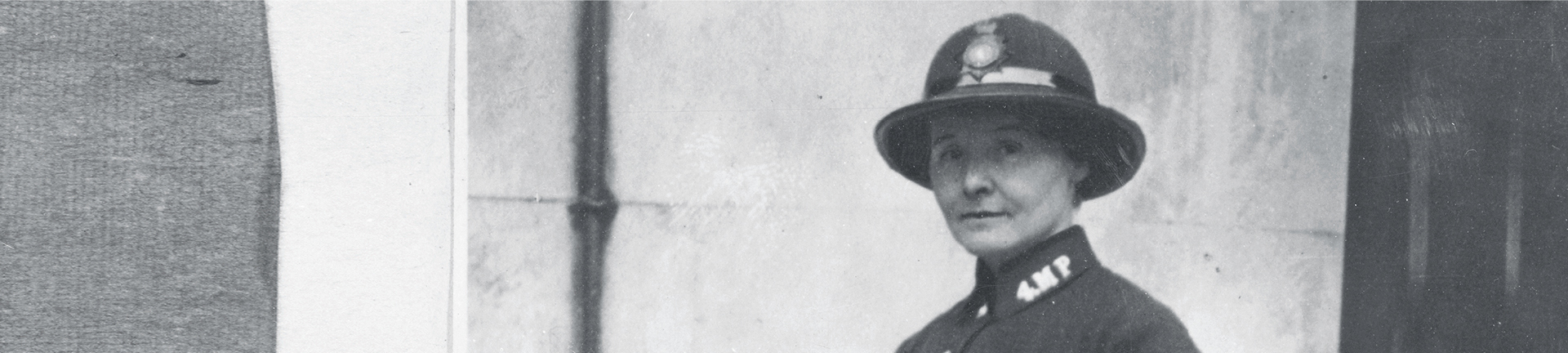
On the 17th February 1919, the first Metropolitan Police Women Patrols came into service. Lilian Wyles was one of the first three sergeants, along with Grace Russell and Patty Alliot.
London was divided into three and each of the sergeants was given a section. Lilian covered central London and the East End, and was given tasks such as searching women and girls, and dealing with children. She had a contract for a year on an ‘experimental basis’ with low pay and no pension. She wasn’t ‘sworn in’ and had no power of arrest.
Lilian was promoted to Inspector 2nd Class in January 1921. After Parliament cut the number of women patrols from 112 to 20 and the Women’s Police department disbanded, Lilian moved to CID as a statement taker in December 1922. She was responsible for taking statements from women and girls in cases of sexual assault and cases involving children north of the Thames.
In 1928, she took part in the Savidge case involving sexual misconduct by an Italian-born Member of Parliament, Leo Chiozza Money.
Lilian was promoted to Inspector 1st Class in 1935 and retired in 1949. She went on to write her memoirs, ‘A Woman at Scotland Yard’ as well as lecture and broadcast on police matters and child welfare. In 1949, she was awarded the British Empire Medal.
Read more stories
-

DS Charmain Brenyah
Mentor for disadvantaged girls.
-

PC Faye McSweeney
Recruiting the next generation of firearm officers.
-

PC Karen Giles
Met's longest serving female police officer.
-

DCI Lily Benbow
Safeguarding partnership lead, Islington & Camden.
-

Chief Superintendent Sally Benatar
Oversees policing in South West London.
-

Commander Shirley Becke OBE QPM
First female Commander.
-

PC Sislin Allen
The Met’s first black female police officer.
-

Superintendent Sofia Stanley
Leader of the first women patrols.
-

Commissioner Cressida Dick
First female Commissioner of the Met.
-

Join the Met
Find out more about careers in the Met and apply.