
... supporting your colleagues
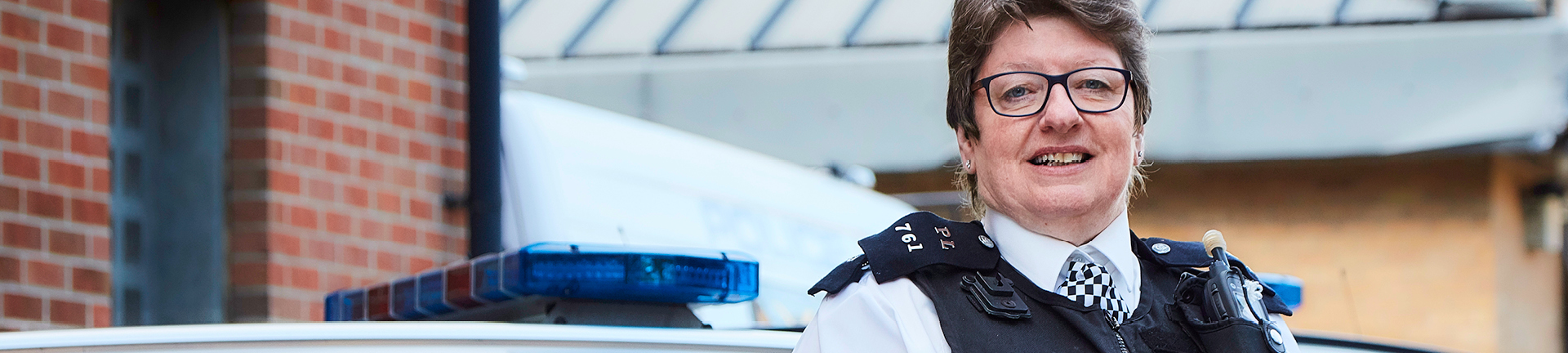
When she was at secondary school, Karen Giles was inspired to join the police by a WPC from the Devon and Cornwall Constabulary who was speaking in a careers session at her school. When she left, she made the long journey to London and has spent the past 42 years serving the people and communities of London.
Karen has worked in several roles including many years at Peckham, which she loved. As part of the Community Safety Unit, Karen investigated crimes relating to issues like race hate, domestic violence and supported vulnerable people – something she is passionate about as her own son is autistic. She says “he is doing very well and is a source of pride to me. He has made me a better person by broadening my understanding of ‘difference’ and what being successful really means.” She now deals with managing local offenders, working with the Probation Service.
In a similar manner to her own journey, Karen has now inspired others to join ‘the job’. 11 years ago she was delighted when her daughter made the choice to follow in her footsteps by becoming a police officer in the Met and, more recently, she was delighted again; this time by the news that her daughter had just passed her Sergeant’s exam.
What’s the most exciting aspect to your current role?
I enjoy my current role because it is part of a team dealing with repeat offenders. I have learned new skills and teamwork is really what the police service does best – working with external agencies is also very interesting.
What strengths do you need to be a good officer?
Well, it's not physical strength. For me it's, in a way, commitment, I think, about taking charge, having the strength to take on other people's situations and sort them out, supporting your colleagues. That’s strength, I think. And not just for women, obviously.
What’s the best thing about the people you work with?
Going to calls and not having to think for one moment about who’s got your back. I have that complete and utter confidence and faith in the people I work with. Teamwork and officers looking out for each other is central to what being in the police service is all about. When you work in a team you know each other so well, especially on response teams because you're there early mornings, late nights, your colleagues become like family, looking after each other is just what you do.
You joined back in 1976. How have you seen the opportunities for women improve?
I joined just after the Sex Discrimination Act came in to force. Just prior to that, women were only employed to work seven-hour days and only paid for those seven hours. They were also limited to dealing mainly with cases involving women and children, not exclusively but in the main. The passing of the Sex Discrimination Act meant that women became fully integrated in all shifts and roles and, amongst other things, could work on what would now be called response teams.
Back in 1975 there were no female dog handlers and there were widely held perceptions that women couldn’t be traffic officers because they lacked the strength to hold up the motorbikes. Back then the hierarchy was very clear. It was not unheard of for male drivers to refuse to take female officers out on patrol. It was a different time, society was different back then. Thankfully, times have changed. It’s a myth that it’s all about physical strength and having to use force. That is the absolute last resort. You’ll go to call where there may be really unreasonable, violent, aggressive people there and police officers, male and female, will stand there for ages and ages giving those people a chance. Giving them another chance. Then another chance. So, I think a lot of it is much more about being able to talk to people to defuse situations rather than resorting to physical strength.
What would you say to other women considering joining the Met?
Being a police officer is a respected role and I have always felt very proud to be a police officer. I am delighted that my daughter made the choice to ‘join the job’. There are difficult times, as in any job, but I think it is a unique career with a wealth of opportunities for women. It is also important to highlight that pay and conditions are equal for male and female officers.
Read more stories
-

DS Charmain Brenyah
Mentor for disadvantaged girls.
-

PC Faye McSweeney
Recruiting the next generation of firearm officers.
-

DCI Lily Benbow
Safeguarding partnership lead, Islington & Camden.
-

Chief Superintendent Sally Benatar
Oversees policing in South West London.
-

Commander Shirley Becke OBE QPM
First female Commander.
-

PC Sislin Allen
The Met’s first black female police officer.
-

Inspector Lilian Wyles
First female CID officer.
-

Superintendent Sofia Stanley
Leader of the first women patrols.
-

Commissioner Cressida Dick
First female Commissioner of the Met.
-

Join the Met
Find out more about careers in the Met and apply.